What Should a Commercial Cleaning Machine Sample Acceptance Record Include?
A cleaning machine sample should not be accepted because it starts, moves, and produces one clean strip. A useful acceptance record connects the delivered unit to the quoted configuration, documents its condition, tests it on a representative route, captures maintenance and training requirements, and leaves a clear list of unresolved items before a larger order proceeds.
This matters to facility managers, cleaning contractors, distributors, and procurement teams because the sample often becomes the reference for later units. If the reference is vague, differences in batteries, brushes, squeegees, chargers, accessories, manuals, or spare parts can pass unnoticed. The record below is designed to make the decision traceable without inventing a universal score or performance promise.
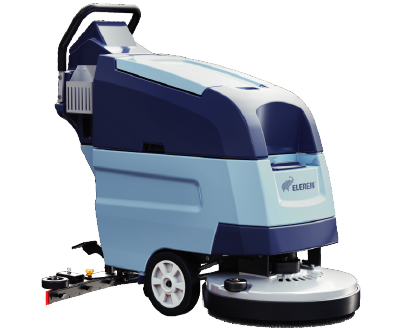
1. Identify the exact delivered unit
Begin with the purchase or quotation reference, supplier, model, serial or unit identifier where provided, delivery date, receiving location, and people present. Photograph the identification labels and the complete machine before packaging is discarded. Record the voltage, battery or power arrangement, charger, brush or pad setup, squeegee assembly, hose, tanks, accessories, and any optional equipment.
Do not assume that two machines with the same headline model name have the same configuration. The acceptance record must distinguish the tested unit from alternative batteries, cleaning widths, accessories, or market-specific packages.
2. Reconcile the sample with the approved quotation
Compare every included item with the approved quotation, order confirmation, packing list, and configuration sheet. Mark each item as present, substituted with approval, missing, damaged, or not applicable. Any substitution should identify who approved it and whether another test is required.
This configuration check should happen before the route test. Otherwise, a result may be attributed to the wrong brush, battery, charger, or recovery setup. ELEREIN's cleaning-machine sample scoring and sign-off protocol provides a useful official framework for tying the test to the exact quoted machine and a pre-approved route.
3. Record delivery and assembly condition
Inspect packaging, frame, tanks, covers, wheels, castors, brush deck, squeegee, hoses, seals, cables, connectors, charger, controls, labels, and accessories. Note scratches separately from cracks, deformation, leakage, loose parts, or operating damage. Photograph each exception with a scale or clear location reference.
If assembly is required, record who completed it, which instructions were followed, and any part or tool that was not supplied. Do not sign off a damaged or incomplete component merely because the machine can still be switched on.
4. Confirm documents and instructions
List the operator manual, maintenance instructions, parts information, warranty terms, safety labels, charger instructions, and configuration-specific documents received. Record the document language, revision or date where shown, and whether the instructions match the delivered unit.
A complete commercial cleaning-equipment handover evidence pack should remain versioned and linked to the ordered configuration. Missing documents should become an open action with an owner and due date rather than a verbal promise.
5. Define the representative test route
Describe the route before running the sample: floor material and condition, approximate area, soil type, aisle and doorway constraints, turns, slopes, thresholds, pedestrian activity, fill and drain points, storage location, and power or charging access. Photograph the starting condition from repeatable viewpoints.
Use the same route and preparation when comparing more than one machine. A short clean demonstration area may confirm basic function, but it cannot represent a facility with tight turns, mixed surfaces, long travel, or repeated refill and disposal tasks.
6. Capture cleaning and recovery observations
Record the installed brush or pad, solution used, machine settings, operator, passes, visible soil removal, edge coverage, turning behavior, water trail, squeegee recovery, and rework. Describe the observed conditions instead of claiming one result applies to every facility.
Photographs should use comparable positions and lighting. If an acceptance threshold is required, define it before the test and link it to observable fields such as remaining residue, repeat passes, leakage, or a site-approved floor condition.
7. Separate productive work from interruptions
Record route time together with filling, draining, changing pads or brushes, clearing debris, adjusting the squeegee, moving between zones, charging, and any unplanned stop. A single total time hides whether the machine completed the work smoothly or spent much of the test out of productive operation.
Battery and runtime observations must include the tested route, settings, floor condition, starting and ending indication, operator, and charging window. They are observations from the sample, not guaranteed runtime values for all conditions.
8. Test routine care and operator handover
Ask the intended operator to demonstrate tank emptying and rinsing, debris removal, brush or pad inspection, squeegee care, charging, cable handling, accessory storage, and the normal end-of-shift check. Record unclear steps, difficult access, excessive lifting, spills, missing tools, and maintenance points that require additional instruction.
Capture the operator's questions and the trainer's answers in the record. Training is not complete only because controls were explained once. The team should be able to repeat the required daily care and identify conditions that take the machine out of service.
9. Confirm first-order consumables and spare parts
List the consumables and wear parts used by the accepted configuration, including brushes, pads, squeegee blades, filters where applicable, hoses, batteries, chargers, seals, and model-specific components. Confirm part numbers or compatibility references, expected lead times, storage requirements, and the process for ordering replacements.
The first-order spare-parts planning method helps buyers base starter stock on exact compatibility, installed quantity, operational impact, and replenishment information instead of buying an arbitrary bundle.
10. Log exceptions, owners, and decision gates
Every missing item, damaged part, failed observation, unclear document, training gap, or configuration difference should have an owner, action, due date, and evidence required for closure. Distinguish between accepted, conditionally accepted with defined actions, and not accepted.
Do not average a critical failure into a high overall score. A sample may clean acceptably yet remain unready because its charger is incompatible, a safety document is missing, the recovery system leaks, or the exact spare parts cannot be identified. The decision gate should reflect the consequence of the open item.
11. State the safety and application boundary
This sample-acceptance framework covers routine commercial cleaning under documented site conditions. It does not establish suitability for hazardous dust, combustible material, chemicals, biological contamination, hot material, or regulated waste. Those applications may require specialized equipment, verified material compatibility, site controls, trained personnel, disposal procedures, and jurisdiction-specific review.
Record pedestrian controls, floor hazards, chemical instructions, charging arrangements, personal protective equipment, emergency procedures, and stop conditions before the test. If the intended material or environment has not been verified, stop the trial and obtain the required technical and safety confirmation.
Conclusion
A strong sample-acceptance record proves more than basic machine operation. It ties the delivered unit to the approved configuration, documents condition and evidence, tests a representative route, verifies daily care and training, identifies spare-parts needs, and assigns every exception to a closure action. That record gives procurement teams a defensible decision and gives suppliers precise information to resolve before fleet rollout or repeat orders.


Comments
Post a Comment