What Facility Managers Should Map Before Choosing a Floor Scrubber
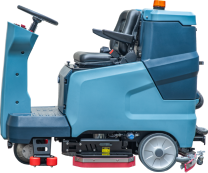
For facility managers, choosing a floor scrubber is not only a product comparison. It is a route-planning decision. A machine that looks suitable on a specification sheet may become inefficient if it cannot turn in narrow corridors, reach refill points easily, recover water fast enough, or fit the operator's daily cleaning rhythm.
Before comparing ride-on and walk-behind machines, managers should map how the building is actually cleaned. This early work makes the equipment decision more accurate and reduces the risk of buying a machine that is either too small for the workload or too large for the environment.
Start with the cleaning area, but do not stop there
Total square meters are useful, but they do not tell the whole story. A 5,000 square meter open warehouse and a 5,000 square meter school building can require very different machines. Open routes favor larger scrubbers and longer working time. Divided routes with classrooms, corridors, elevators, storage rooms, and furniture require tighter turning and easier handling.
A practical map should separate open areas from congested zones. It should also show which areas are cleaned daily, which areas are cleaned weekly, and which areas need quick recovery because people walk through them soon after cleaning.
Mark obstacles and turning points
Many cleaning delays happen at turns, doorways, ramps, pillars, shelves, reception areas, and equipment rooms. If the machine cannot move smoothly through these points, theoretical productivity becomes less useful. Facility teams should walk the route and record the tightest turns, narrowest doors, and areas where people, carts, pallets, or furniture may block the path.
This is especially important for facilities such as hospitals, hotels, schools, and supermarkets, where cleaning happens around staff, visitors, patients, or customers. In these environments, safety and control may matter as much as speed.
Check water access and drainage points
Tank capacity affects productivity, but refill and drain locations can affect the real working time just as much. If operators must travel a long distance to refill clean water or empty recovery tanks, the route may need to be divided into smaller cleaning sections.
Facility managers should mark where water is available, where wastewater can be drained, whether elevators or ramps are involved, and whether operators can safely move a filled machine between zones. This information helps determine whether a larger tank is useful or whether a smaller, more flexible machine is easier to manage.
Define the drying requirement
Drying performance is often overlooked until users complain about streaks or wet floors. The squeegee system, recovery tank, vacuum performance, floor type, operator speed, and blade condition all affect how clean and dry the floor feels after scrubbing.
Areas near entrances, corridors, production lines, hotel lobbies, hospital pathways, and public walkways usually need stronger water recovery. If people must walk across the floor soon after cleaning, drying performance should be a core buying requirement, not a secondary detail.
Match machine type to operator workload
Operator fatigue can change cleaning quality. A walk-behind scrubber may be ideal for compact or mixed routes, but long open routes can become tiring if one operator cleans them every day. A ride-on machine may reduce fatigue in large areas, but it may be inefficient if the route is fragmented or crowded.
The right question is not simply whether a ride-on machine is better than a walk-behind machine. The better question is whether the operator's daily workload matches the route, the tank size, the battery working time, the turning space, and the cleaning frequency.
Plan maintenance before purchase
Brushes, pads, squeegee blades, filters, hoses, batteries, and tanks all need routine attention. A machine that is easy to maintain is more likely to stay in daily use. Before purchase, managers should decide who will clean the recovery tank, replace squeegee blades, inspect brushes, charge batteries, and store accessories.
Maintenance planning also helps with quotation comparison. Two machines with similar basic specifications can have different long-term costs if consumables, spare parts, training, and after-sales support are not considered.
A simple pre-purchase checklist
- Which areas are cleaned daily, weekly, or occasionally?
- Which parts of the route are open, narrow, or congested?
- Where are the refill and drainage points?
- How dry must the floor be after each cleaning pass?
- How many hours does the operator clean each day?
- Where will the machine be charged and stored?
- Which brushes, pads, squeegee blades, and spare parts should be quoted with the machine?
Conclusion
A floor scrubber should be selected after the facility cleaning route is understood. Square meters, tank capacity, cleaning width, battery life, drying performance, turning space, and maintenance planning all need to be considered together. When the route is clear, the choice between walk-behind and ride-on equipment becomes more practical, and the quotation discussion becomes easier for both the buyer and the supplier.


Comments
Post a Comment