How Should Facility Teams Validate a Floor Scrubber After Squeegee Replacement?
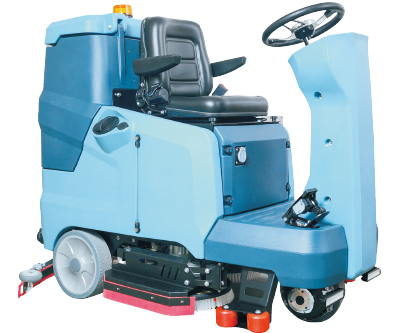
Replacing or rotating a floor scrubber squeegee blade does not prove that the recovery system is ready for service. A blade can be new and still leave water because it is installed unevenly, the assembly is not centered, the recovery hose is restricted, the tank seal leaks, or the test route does not match the real floor.
A short acceptance test gives facility teams evidence before the machine returns to a busy route. The goal is not to create a dramatic demonstration. It is to confirm that the complete recovery path performs consistently under known conditions.
Start with the maintenance record
Record the machine ID, date, operator, blade part or approved specification, whether the blade was replaced or rotated, and the reason for service. Note the previous symptom, such as a continuous water trail, leakage on one side, poor recovery during turns, or visible blade damage.
This record prevents a common mistake: treating every wet-floor complaint as a blade problem. A structured floor scrubber maintenance checklist helps teams inspect brushes, squeegees, tanks, batteries, and recovery components in a repeatable order.
Inspect the assembly before adding water
With the machine secured according to its instructions, check that the blade is the correct type and orientation, sits evenly in the holder, and is not twisted, folded, cut, contaminated, or trapped by its retaining hardware. Confirm that fasteners and adjustment points are secure without improvising modifications.
Inspect the squeegee body, wheels or supporting components where fitted, hose connection, recovery hose, inlet, tank seal, float or shutoff components, and visible debris paths. A new blade cannot compensate for an air leak or blockage elsewhere in the system.
Define a repeatable test route
Select a small area with representative flooring and enough room for straight travel and controlled turns. Record the floor material, surface condition, route length, travel direction, machine settings, and amount of test solution. Use the same route for the initial test and any retest.
Avoid judging the result on an unknown spill, uneven drainage area, damaged floor, or heavily contaminated surface. Start with a controlled condition so the team can separate machine behavior from site variation. ELEREIN's published product testing methods emphasize recording the route, operating condition, workflow, and visible result rather than relying only on a specification claim.
Run straight passes before testing turns
Begin with several straight passes at a consistent speed. Observe the full width behind the squeegee and note whether residual water is continuous, intermittent, centered, or concentrated on one side. Photograph the result from the same angle after each adjustment.
A one-sided trail may suggest alignment, blade contact, debris, wear, or floor-level variation. A continuous full-width film may point toward recovery airflow, tank sealing, hose condition, operating settings, or excessive solution. These are diagnostic clues, not proof of a particular failed component.
Test turns as a separate condition
A machine may recover water acceptably in a straight line and leave a trail during turns. Use the normal route direction and a repeatable turning radius. Watch whether the squeegee tracks the machine smoothly and whether the symptom appears only during entry, throughout the turn, or on exit.
Do not make several unrelated adjustments at once. Change one documented setting or correct one observed installation issue, then repeat the same route. This makes the result traceable and reduces unnecessary part replacement.
Measure the result with practical criteria
Define acceptance before the test. Useful fields include visible residual-water pattern, length of any trail, number of repeat passes, recovery interruptions, unusual noise, hose movement, tank indication, and the time until the surface reaches the site's required condition.
The test should not promise an absolute drying time for every facility. Drying varies with floor texture, solution volume, humidity, airflow, machine setup, speed, turns, and surface contamination. The acceptance record should describe the observed conditions and limitations.
Check the operator setup
Confirm that the operator can lower and raise the assembly correctly, identify the relevant controls, inspect the recovery path, empty and rinse the tanks, and report a repeated symptom. If the machine requires adjustment for a particular floor or route, document the approved setting rather than relying on memory.
Facilities comparing walk-behind floor scrubber configurations can include this recovery test in a sample evaluation, while still verifying the exact model, accessories, documentation, and site requirements.
Use clear release and stop states
Mark the machine as ready only when the controlled route meets the recorded acceptance criteria and no unresolved condition affects safe operation. Use a restricted state only when the responsible supervisor has defined and approved a specific limitation. Mark it out of service when leakage, damaged components, abnormal noise, electrical concerns, repeated recovery failure, or another site-defined condition requires inspection.
Operators should not bypass shutoffs, modify recovery components, continue using damaged electrical equipment, or dismantle systems outside their authorization. Escalate according to the machine documentation and facility procedure.
Keep the safety scope explicit
This validation method supports routine commercial floor-cleaning work. It does not establish suitability for hazardous dust, combustible material, chemicals, biological contamination, hot material, or regulated waste. Those conditions require equipment, controls, training, disposal procedures, and documentation verified for the specific hazard and jurisdiction.
Slip-control measures and access restrictions should remain in place during testing. The area should not be returned to normal traffic merely because a new blade has been installed.
Review repeated failures as a system problem
If the same trail returns after a verified installation and controlled retest, review the complete recovery path, route conditions, operator setup, service history, and part specification. Repeatedly replacing blades without confirming the cause adds cost while leaving the original problem unresolved.
Keep the test sheet with the machine record. Over time, consistent entries can reveal whether failures follow a floor zone, operating shift, hose condition, adjustment, consumable batch, or maintenance interval.
Conclusion
A squeegee replacement is complete only after the recovery system is tested as a whole. Inspect the installation, define a repeatable route, separate straight passes from turns, record the visible result, and use clear release criteria. That process gives operators, maintenance teams, and supervisors a shared basis for deciding whether the machine is truly ready.


Comments
Post a Comment